

The EU is pushing tablet manufacturers towards more durable, repairable and longer-lasting devices. But what could that mean for businesses using tablets in kiosks, mounts and fixed installations?
The tablet market is changing.
Tablets are no longer just consumer devices for browsing, streaming and productivity. Businesses are increasingly using them in retail, hospitality, healthcare, self-service kiosks, reception areas, digital signage and industrial environments.
For these applications, the tablet itself is only part of the investment. How it is mounted, secured, powered and maintained can be just as important.
That makes recent changes to European tablet legislation particularly interesting.
Since June 2025, new EU Ecodesign requirements have applied to smartphones and tablets placed on the European market, covering areas including durability, repairability, battery performance and software support. Meanwhile, USB-C charging has been mandatory for covered tablets sold in the EU since the end of 2024.
So, what could these changes mean for businesses using compact 8-inch tablets?
Longer-lasting tablets, longer-term installations
One of the key aims of the EU's new Ecodesign rules is to encourage devices that last longer and are easier to repair.
- The requirements cover areas such as resistance to drops and scratches, battery durability, spare-parts availability and software support. Covered devices must also have operating-system updates available for at least five years from when the last unit of a model is placed on the market.
- For consumers, that means potentially getting more useful life from their devices.
For businesses, there is another benefit.
If a tablet is expected to remain useful for several years, it makes sense to think about the entire installation around it.
An 8-inch tablet installed into a kiosk or secure mount may be connected to permanent power, running dedicated software and forming part of a wider business system. Replacing it can therefore involve considerably more time and cost than simply buying a new tablet.
The longer the tablet lasts, the more important the mounting infrastructure becomes.
Why tablet mounting matters
A tablet mount can sometimes be viewed as a simple accessory - something that holds a device in place. In a commercial environment, it can be much more than that.
A well-designed mounting solution can help protect the tablet, manage cables, provide security and make the device easier to access when maintenance or replacement is required.
This becomes particularly relevant as tablets are designed with longer lifecycles in mind.
If the tablet is built to last, shouldn't the installation around it be built to last too?
For businesses investing in multiple tablets, this approach can help reduce unnecessary replacement costs and minimise downtime.
Repairability and accessibility
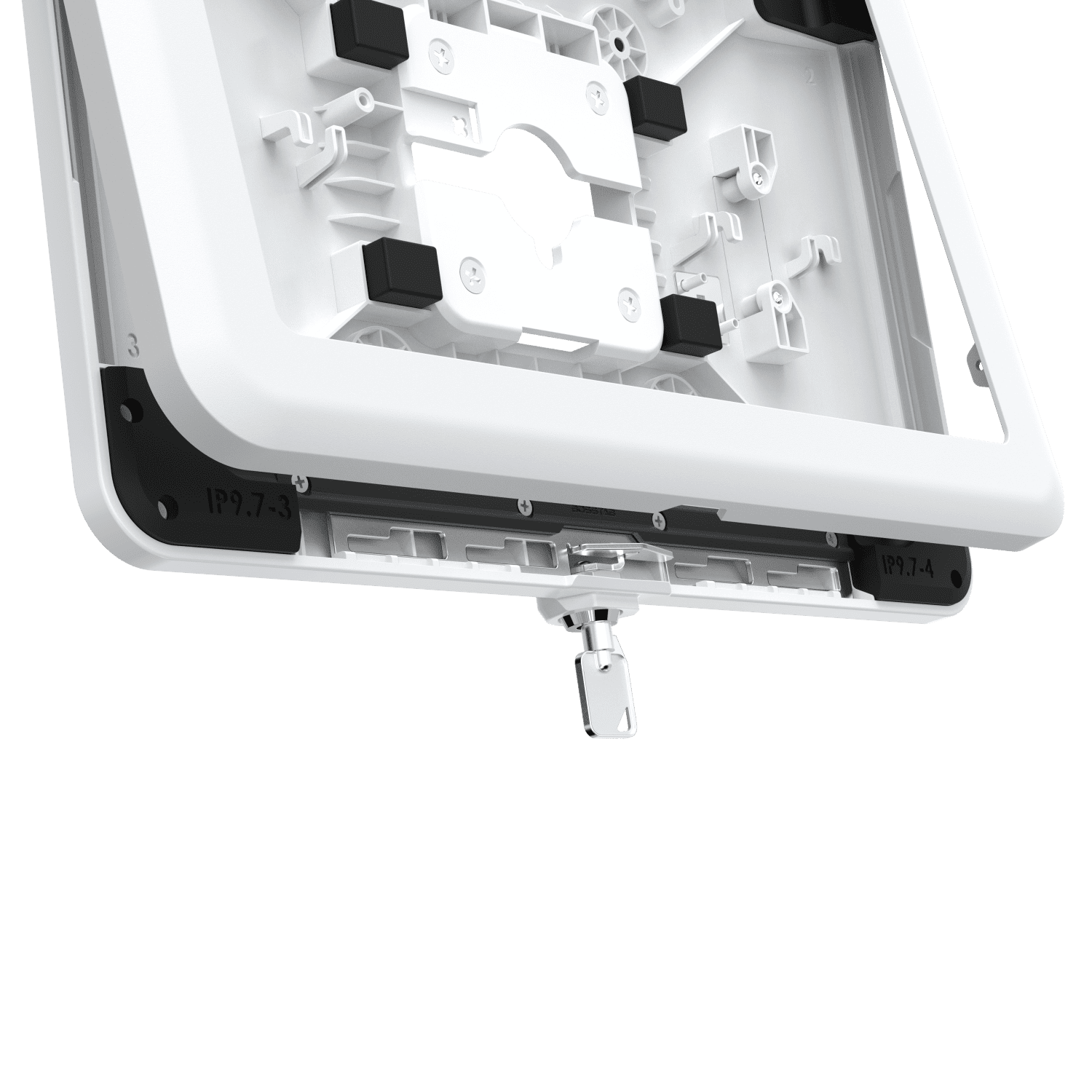
Repairability is another important part of the EU's approach. The new requirements include provisions around repair and the availability of spare parts.
For a tablet sitting on a desk, this is largely a consideration for the manufacturer and repairer.
For a tablet installed inside a kiosk or enclosure, accessibility can become part of the installation design.
Businesses need security and protection, but they also need authorised staff to be able to access the device when maintenance is required.
This is why features such as secure but removable enclosures, straightforward tablet access and effective cable management can be important when designing a commercial installation. The aim is to protect the tablet without making routine servicing unnecessarily difficult.
USB-C and fixed tablet installations
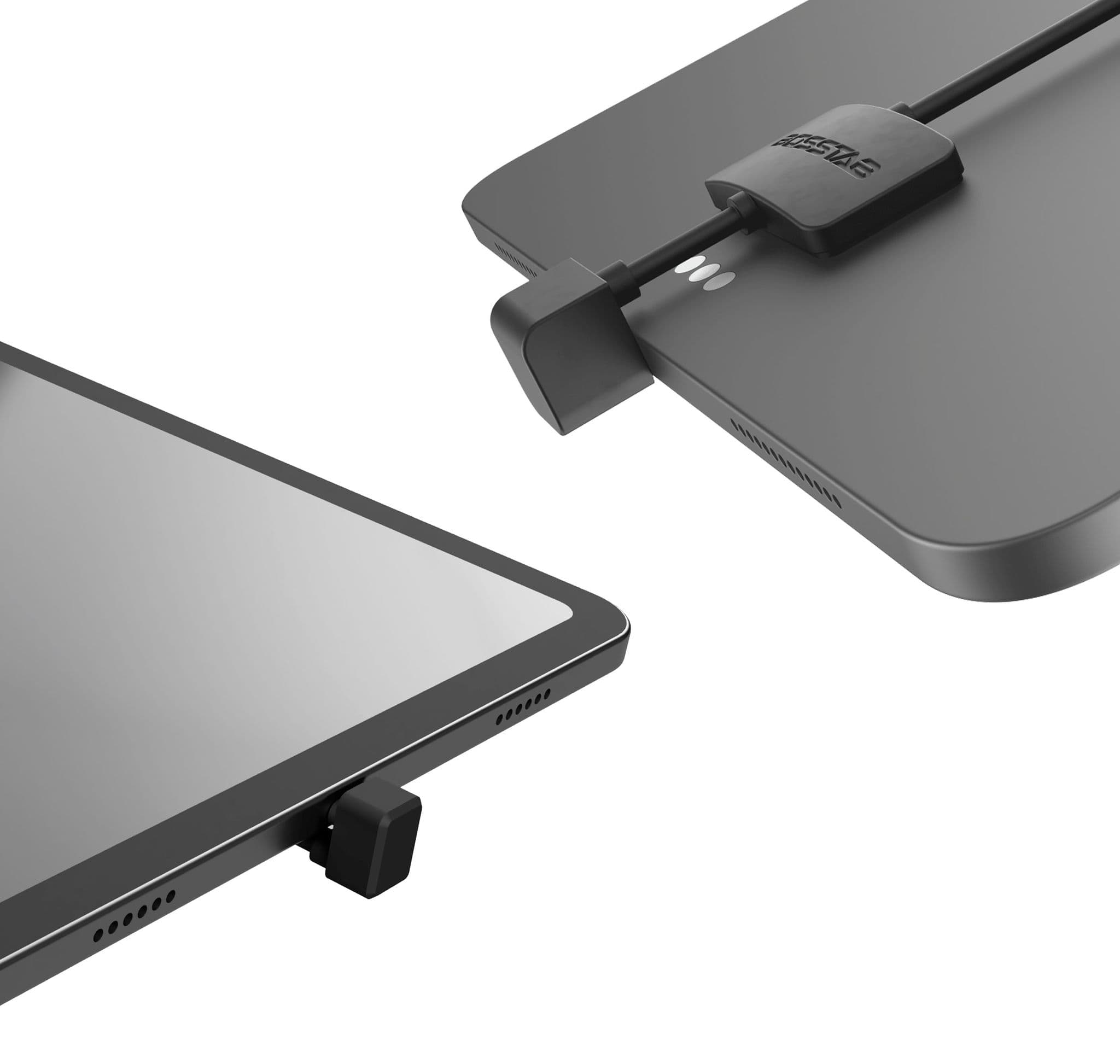
Another major change is the EU's Common Charger legislation.
Since 28 December 2024, covered tablets sold in the EU have been required to use USB Type-C for wired charging. The legislation aims to reduce electronic waste and make chargers more interchangeable between devices.
For mounted tablets, this standardisation is useful. Power in a commercial installation isn't simply a cable plugged into a device. It can involve:
Power supply → cable management → mount or kiosk → tablet
The position of the USB-C port, cable routing and access to the connection therefore all need to be considered when designing an installation.
Durability doesn't remove the need for protection
The new Ecodesign requirements are intended to make tablets more resistant to everyday damage, including drops, scratches, dust and water.
However, a tablet used in a public-facing or commercial environment can face challenges that a home device doesn't.
It may be exposed to constant handling, accidental knocks, cable strain or attempts at unauthorised removal.
A commercial mount, enclosure or kiosk can provide an additional layer of protection and security.
The tablet and the mounting solution have different roles:
The tablet provides the technology. The mounting solution helps integrate and protect it within its environment.
Think beyond the tablet you buy today
For businesses planning a new tablet deployment, it is worth considering what happens several years down the line:
- How long will the tablet receive software updates?
- How easy will it be to repair or replace?
- What happens if the model is discontinued?
- Can the tablet be removed from its mount without dismantling the entire installation?
- And, perhaps most importantly, can the mounting solution be adapted if the tablet is eventually upgraded?
These questions become increasingly important when deploying dozens or hundreds of devices.
A mount or kiosk that can support a longer tablet lifecycle can potentially reduce disruption and help businesses get more value from their investment.
What does this mean for 8-inch tablets?
The future of the 8-inch tablet market is particularly interesting.
Compact tablets offer a useful combination of portability and screen space, making them well suited to applications where space is limited. They can be ideal for kiosks, point-of-sale systems, information displays and other commercial installations.
At the same time, manufacturers must balance the cost of developing and supporting compact devices against market demand.
It is too early to say that EU regulation will lead to fewer 8-inch tablets being available. However, the increased emphasis on durability, repairability and long-term software support could influence which models manufacturers choose to develop and maintain for the European market.
For businesses, this makes future compatibility worth considering when planning a tablet installation.
The bigger picture
The EU's tablet regulations aren't specifically about mounting solutions or kiosks.
They are part of a broader move towards technology that is more durable, repairable and sustainable.
For businesses, that creates an opportunity to think beyond the tablet itself.
If a device is designed to last longer, the surrounding installation should support that lifespan - providing appropriate security, protection, power management and access for maintenance or replacement.
At armourdog, we believe that a successful tablet installation is about more than simply finding somewhere to

put a tablet. It's about creating a secure, practical and maintainable solution designed around how the device will actually be used. Our locpad®and various other mounting solutions feature future-proofing designs which allow for tablet upgrades and accessory add-ons as and when needed.
As tablets continue to evolve, the hardware surrounding them will become an increasingly important part of the overall solution.
The future of tablets may be about making the device last longer. The future of tablet installations should be about making the whole system last longer too.
Explore the tablet security options today, or discuss your project with the team here.