

For a software company working with factories and production environments, demonstrating what their software can actually do is just as important as the software itself.
The challenge was simple: how do you demonstrate the software in a real-life factory environment if you don’t have a suitable installation solution for the hardware?
The customer needed a way to show their software running on a tablet, positioned as it would be in a real production environment, for example, allowing users to monitor and interact with a production line.
What started as a straightforward tablet mounting requirement quickly developed into a bespoke hardware project, combining Bosstab, locpad and modloc solutions to create a flexible, robust installation platform.
Starting with a Bosstab floor stand
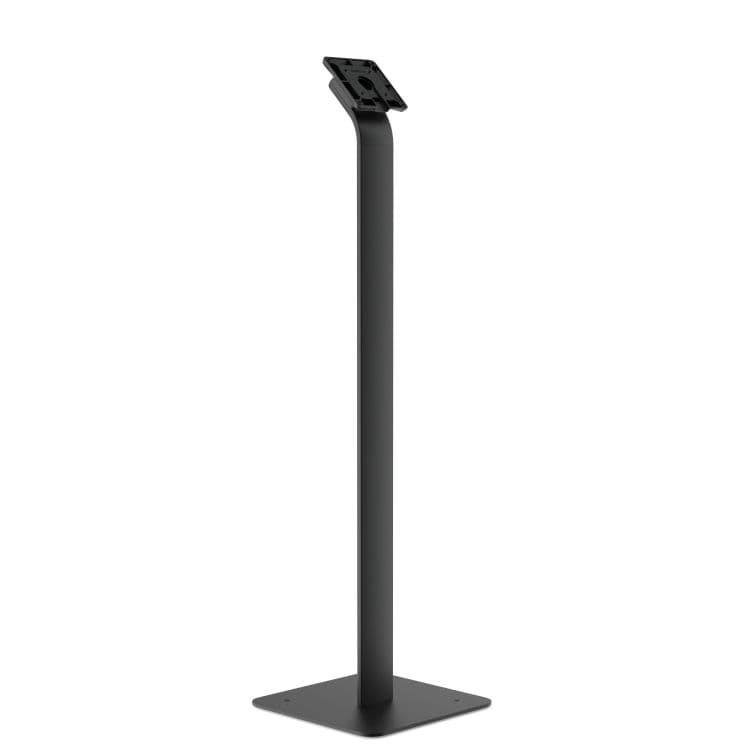
As a first trial, we supplied a Bosstab floor stand with a Touch mount.
The customer was keen to use a tablet-based solution because it provided an excellent way to demonstrate their software. A large, interactive touchscreen meant visitors and potential customers could see the software operating in a way that closely reflected the final real-world application.
However, it soon became clear that the standard Touch solution wasn't protective enough for the environments the customer was targeting.
Factories can present very different conditions to an office or showroom. Dust, dirt, heat and the general demands of an industrial environment all needed to be considered.
So the question became:
What could we develop to retain the functionality of a tablet while offering much greater protection?
Finding the right tablet
The TFL tablet presented an attractive option. It offered a large screen at an affordable price, making it well suited to demonstrating the customer's software. However, it wasn't a tablet we had worked with previously, so there was some important groundwork to do before designing an enclosure around it.
We researched how much heat the tablet generated when operating at full capacity. This was particularly important because, with devices such as the Surface Pro, additional ventilation can sometimes be required.
We also looked closely at the tablet's charging connection.
Rather than simply designing the enclosure around the charging cable, we considered whether a right-angled cable would provide a cleaner and more practical solution. In the end, we opted to supply an armourdog right-angled cable, reducing the strain and final weight on the enclosure while also creating a neater internal cable arrangement.
Alongside this, we discussed the cameras required, potential user requirements and the other practical considerations that would influence the final enclosure design.
Designing the modloc enclosure
With the requirements established, we began work on creating a bespoke modloc enclosure.
Two areas were particularly critical…
Protecting the tablet
The enclosure needed to be large enough to accommodate the TFL tablet and its associated connections, while also minimising the potential for dust and dirt to enter.
The aim wasn't simply to create a box around the tablet. It needed to provide a practical level of protection for the device while still allowing it to perform effectively in the intended environment. And we hope always maintain an element of design softness to the final look.
Creating a universal mounting solution
The second key consideration was mounting flexibility.
We designed the enclosure around a 100 mm VESA configuration, giving the customer far more options when it came to installation.
Whether the enclosure needed to be attached to a desk, wall or floor mount, using a standard VESA configuration meant it wasn't tied to one particular mounting solution or installation location.
This flexibility also meant the enclosure could potentially work with mounting hardware the customer already had in place.
From concept to first enclosure
Developing a bespoke product inevitably involves refinement.
After a couple of design revisions and around 10 weeks of development, the first enclosure came off the press.
On this occassion, shipping it to the customer, we drove the enclosure directly to them so they could begin testing it in the environment where it would ultimately be used.
This testing stage was crucial. It allowed the customer to assess the enclosure alongside their software and consider how the complete solution would work in practice.
Building a complete mounting ecosystem
While the first enclosure was being developed, we were also looking at how we could turn the concept into a more flexible product offering.
We developed solutions that combined Bosstab, locpad and modloc connectivity, using bespoke mounting plates to connect the 100 mm VESA configuration with the different locpad and modloc VESA configurations.
This created a much broader range of installation possibilities.
The same tablet enclosure could be configured for:
Desk mounting
Wall mounting
Floor mounting
Integration with existing 100 mm VESA mounting plates
Bespoke mounting requirements using the appropriate mounting plate
Importantly, the enclosure didn't have to be sold as part of a complete mounting bundle. Customers could also purchase the enclosure on its own and attach it to a 100 mm VESA plate they already had.
From one-off project to field testing
Once the enclosure and mounting options had been established, we moved on to creating the complete bundles and calculating the associated pricing.
The next milestone was putting the solution into the real world.
10 units were produced and placed in the field for testing.
This represented a significant step forward from the original requirement: what began as a need to demonstrate software on a tablet had evolved into a flexible hardware platform designed specifically to help software become a tangible, real-world factory solution.
The result
The project demonstrates the value of looking beyond the initial requirement.
The customer's original challenge wasn't simply, "Can you mount our tablet?"
It was:
"How can we make our software tangible in the environment where our customers will actually use it?"
By combining existing Bosstab mounting solutions with a bespoke modloc enclosure, standardised VESA compatibility, careful consideration of tablet performance and connectivity, and flexible mounting options, we were able to develop a solution that could move from demonstration to real-world testing.
And with 10 units now in the field, the project has moved beyond concept and into the next stage: proving how the solution performs in real factory environments.
What started with one floor stand ultimately became a bespoke, scalable installation solution designed to bridge the gap between software and the physical world.
If you have a bespoke project - get in touch today!